Hardware:
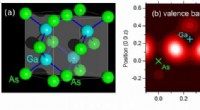
* Semiconductor Physics: The very foundation of computers is built on semiconductor physics. Understanding how electrons behave in silicon allows us to create transistors, the building blocks of processors, memory, and other circuits.
* Electromagnetism: This governs how data is transmitted and stored. Understanding electromagnetic waves is crucial for designing antennas, optical fibers, and other communication technologies.
* Thermodynamics: Heat dissipation is a critical concern in computer design. Physics helps us understand how heat flows, allowing us to create efficient cooling systems for CPUs and GPUs.
* Mechanics: The physical design of computers, from the mechanical components of hard drives to the intricate movements of robotic arms, relies on principles of mechanics.
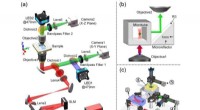
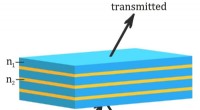
* Optics: Optical computing is an emerging field aiming to replace electronic circuits with light-based ones. This research relies heavily on optics and quantum mechanics.
Software:
* Algorithms: Many algorithms are inspired by natural phenomena. Examples include:
* Genetic algorithms: Based on biological evolution.
* Neural networks: Inspired by the structure of the human brain.
* Particle swarm optimization: Models the social behavior of flocks of birds.
* Simulation: Physics provides the foundation for simulating real-world phenomena, from weather patterns to the behavior of galaxies. These simulations are used in various fields, including scientific research, gaming, and engineering.
* Computer Graphics: Rendering realistic images and animations requires knowledge of optics, lighting, and material properties.
* Data Analysis: Techniques like Fourier analysis, which originated in physics, are widely used for analyzing data and identifying patterns.
Emerging Technologies:
* Quantum Computing: Leverages the principles of quantum mechanics to develop computers that can solve certain problems exponentially faster than classical computers.
* Nanotechnology: Exploits the properties of materials at the nanoscale to create smaller, faster, and more energy-efficient computers.
Overall, physics is a foundational science for computer science, shaping our understanding of how computers work and providing the tools to develop new technologies.