It's impossible to cover *all* recent developments in physics, but here are a few exciting areas with the underlying principles:
1. Quantum Computing:
* Principle: Quantum mechanics, specifically superposition and entanglement.
* Recent developments:
* Improved qubit coherence: Quantum computers are more stable and less prone to errors.
* New quantum algorithms: Algorithms for specific tasks (e.g., drug discovery, materials science) are being developed.
* Quantum supremacy: Google demonstrated a quantum computer performing a specific task faster than any classical computer.
2. Gravitational Waves:
* Principle: General relativity, which describes gravity as a curvature of spacetime.
* Recent developments:
* Detection of gravitational waves from black hole mergers and neutron star collisions: Confirmed Einstein's theory and provided new insights into these extreme events.
* Observing polarization of gravitational waves: This helps to further validate general relativity and understand the properties of gravitational waves.
* Multi-messenger astronomy: Combining gravitational wave observations with electromagnetic signals (light, radio waves, etc.) provides a more comprehensive understanding of celestial events.
3. Neutrino Physics:
* Principle: The Standard Model of particle physics, specifically the properties of neutrinos.
* Recent developments:
* Discovery of neutrino masses: Neutrinos have a tiny but non-zero mass, which is not explained by the Standard Model and requires an extension.
* Understanding neutrino oscillations: Neutrinos change flavor (electron, muon, tau) as they travel, implying that they are not massless.
* Search for sterile neutrinos: These hypothetical particles could explain discrepancies in neutrino observations.
4. Dark Matter and Dark Energy:
* Principle: Astrophysical observations and cosmology.
* Recent developments:
* More precise measurements of dark matter distribution: This helps to constrain the nature of dark matter particles.
* Improved understanding of dark energy: Observations suggest that the universe is expanding at an accelerating rate, driven by an unknown force called dark energy.
* Searches for dark matter particles: Experiments like LUX-ZEPLIN and XENON are searching for direct interactions of dark matter particles with ordinary matter.
5. High-Energy Physics:
* Principle: The Standard Model of particle physics, which describes the fundamental forces and particles.
* Recent developments:
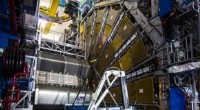
* Search for the Higgs boson: The discovery of the Higgs boson at the Large Hadron Collider (LHC) confirmed the existence of the mechanism that gives mass to particles.
* New physics beyond the Standard Model: The LHC is searching for new particles and interactions that could explain phenomena like dark matter and the mass of neutrinos.
* Precision measurements of known particles: Studying the properties of known particles with high precision can reveal hints of new physics.
6. Quantum Materials:
* Principle: Condensed matter physics, specifically quantum mechanics and many-body physics.
* Recent developments:
* Discovery of new materials with exotic properties: Materials like topological insulators, Dirac semimetals, and high-temperature superconductors exhibit unusual quantum behavior.
* Development of new quantum technologies: These materials have the potential to revolutionize electronics, sensors, and energy storage.
* Better understanding of fundamental quantum phenomena: Studying these materials helps to gain a deeper understanding of quantum mechanics and many-body interactions.
7. Artificial Intelligence and Machine Learning in Physics:
* Principle: Computational methods and statistical analysis.
* Recent developments:
* Data analysis of complex experiments: AI is used to analyze large datasets from experiments like the LHC and gravitational wave detectors.
* New theoretical models and predictions: AI can help to identify patterns and make predictions in theoretical physics.
* Accelerating scientific discovery: AI can automate tasks and accelerate the process of scientific research.
Important Note: This list is not exhaustive and there are many other exciting developments happening in physics. The field is constantly evolving with new discoveries and theories.