1. Direct Measurement Techniques:
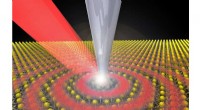
* Laser Doppler Vibrometry (LDV): A non-contact method that uses a laser beam to measure the Doppler shift of light scattered by the vibrating particle. LDV provides high-resolution measurements of vibration amplitude and frequency.
* Accelerometers: Small, sensitive devices that measure acceleration. By integrating the acceleration signal twice, you can obtain the displacement and velocity of the particle. Accelerometers are suitable for measuring vibrations in a wide range of frequencies.
* Microscope-based Techniques: For very small particles, techniques like Atomic Force Microscopy (AFM) or Scanning Electron Microscopy (SEM) can be used to directly visualize the particle's movement and measure its vibration.
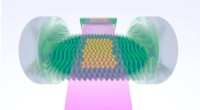
* Optical Trapping and Manipulation: Using laser beams to trap and manipulate particles, it's possible to measure their vibration by analyzing their movement in the trap.
2. Indirect Measurement Techniques:
* Acoustic Emission (AE): Detects the sound waves emitted by vibrating particles. AE analysis can provide information about the frequency, amplitude, and location of vibrations.
* Photoacoustic Spectroscopy: When particles absorb light, they can generate heat, which can cause vibrations. By analyzing the heat produced, information about the particle's vibration can be obtained.
* Force Sensors: Measuring the force exerted by a vibrating particle on a sensor can be used to infer its vibration characteristics.
Factors to Consider When Choosing a Technique:
* Particle size and material: The choice of technique depends on the particle's size and its material properties.
* Environment: The surrounding environment, such as temperature, pressure, and fluid viscosity, can influence the measurement.
* Frequency range: The desired frequency range of the measurement will determine the appropriate technique.
* Sensitivity: The required sensitivity of the measurement will influence the choice of technique.
Examples of Applications:
* Nanotechnology: Studying the vibration of nanoparticles in liquids and solids.
* Materials Science: Characterizing the mechanical properties of materials by studying the vibration of their constituent particles.
* Geophysics: Monitoring seismic activity by measuring the vibration of the Earth's surface.
* Aerospace engineering: Understanding the vibration of aircraft components to ensure structural integrity.
It's important to note: The selection of the most appropriate technique for measuring particle vibration depends on the specific application and the desired level of detail.