Here's why:
* Mechanical waves: These waves require a medium (like air, water, or solids) to travel. They transfer energy through the vibration of particles in that medium.
* Longitudinal waves: The particles in the medium vibrate parallel to the direction the wave travels. Think of a spring: if you push one end, the compression travels along the spring in the same direction as your push.
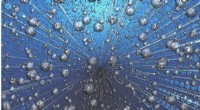
Sound waves work similarly. The vibrating source (like a speaker) causes the air molecules to compress and expand, creating areas of high pressure (compressions) and low pressure (rarefactions) that travel through the air in the same direction as the vibrations.