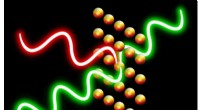
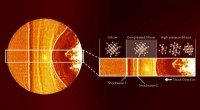
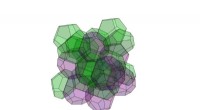
* Electrostatic Forces: These forces arise from the attraction between opposite charges. Positively charged particles attract negatively charged particles. This is a fundamental force that plays a major role in holding atoms together in molecules and molecules together in solids and liquids.
* Gravitational Forces: While much weaker than electrostatic forces, gravity is always attractive. It acts between any two objects with mass, including particles. However, gravity becomes significant only at larger scales like planets or stars.
* Van der Waals Forces: These are weaker forces that arise from temporary fluctuations in electron distribution around atoms. They are responsible for attractions between nonpolar molecules and play a role in holding some liquids and solids together.
How distance affects attraction:
* Electrostatic forces: The strength of electrostatic attraction decreases rapidly as the distance between particles increases. This follows an inverse square law, meaning if you double the distance, the attraction becomes four times weaker.
* Gravitational forces: Similarly, gravitational attraction also decreases with distance, following an inverse square law.
* Van der Waals forces: These forces are even more sensitive to distance. They are very short-range forces, meaning they become negligible beyond a certain distance.
In summary:
While distance doesn't directly attract particles, it plays a crucial role in determining the strength of attractive forces between them. The farther apart particles are, the weaker the attraction between them, regardless of the type of force involved.