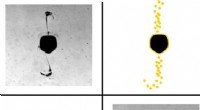
1. Stationary Source:
* Pulse moves away from the source: If the source is stationary, the pulse travels away from it at a constant speed (the wave speed).
* No relative motion between the source and pulse: The pulse and the source are not moving relative to each other.
2. Moving Source:
* Doppler Effect: When the source is moving, the observed frequency and wavelength of the pulse change. This is known as the Doppler Effect.
* Higher frequency/shorter wavelength when approaching: If the source is moving towards the observer, the pulse waves are compressed, resulting in a higher frequency and shorter wavelength.
* Lower frequency/longer wavelength when receding: If the source is moving away from the observer, the pulse waves are stretched out, resulting in a lower frequency and longer wavelength.
Key Points:
* Pulse speed remains constant: The speed of the pulse itself (wave speed) remains constant regardless of the source's motion.
* Relative motion affects perception: It's the relative motion between the source and the observer that causes the observed frequency and wavelength to change.
Example:
Imagine a boat creating ripples on the surface of a lake.
* Stationary boat: The ripples move outward from the boat at a constant speed.
* Moving boat: The ripples in front of the boat are closer together (higher frequency), while the ripples behind the boat are further apart (lower frequency).
To summarize:
* Stationary source: Pulse travels away from the source at a constant speed, no relative motion.
* Moving source: Pulse still travels at a constant speed, but the observed frequency and wavelength change due to the Doppler Effect.