1. Classical Mechanics:
* Focus: The motion of macroscopic objects and systems, not considering quantum effects. This includes topics like Newton's Laws of Motion, momentum, energy, work, power, rotational motion, and simple harmonic motion.
2. Electromagnetism:
* Focus: The study of electric and magnetic phenomena and their interrelation. It includes topics like Coulomb's Law, electric fields, magnetic fields, electromagnetic waves, and the interaction of charged particles with electromagnetic fields.
3. Thermodynamics and Statistical Mechanics:
* Focus: The study of heat, temperature, energy, and their relationship to macroscopic systems. Thermodynamics deals with the macroscopic properties of systems while statistical mechanics uses statistical methods to explain macroscopic properties from microscopic ones.
4. Quantum Mechanics:
* Focus: The study of the behavior of matter and energy at the atomic and subatomic level. It includes topics like wave-particle duality, quantum superposition, Heisenberg's uncertainty principle, and the quantum nature of light and matter.
5. Optics:
* Focus: The study of light and its properties, including reflection, refraction, diffraction, polarization, and the interaction of light with matter. It's a broad field encompassing classical and quantum optics.
6. Condensed Matter Physics:
* Focus: The study of the physical properties of materials, particularly solids and liquids, including their structure, bonding, electronic properties, and thermal properties. It explores materials ranging from simple metals to complex materials like semiconductors and superconductors.
Beyond These 6:
There are many other crucial areas of physics, often overlapping with these core areas, including:
* Relativity: Dealing with the structure of spacetime and gravity.
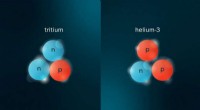
* Nuclear Physics: Focusing on the structure and properties of atomic nuclei.
* Particle Physics: Exploring the fundamental building blocks of matter and their interactions.
* Astrophysics: The study of celestial objects and phenomena.
* Cosmology: Investigating the origin and evolution of the universe.
These are just some of the major areas within the vast realm of physics. Each area is a rich field of study with many specialized subfields and ongoing research.