1. Mechanical Waves:
* Definition: These waves require a medium to travel through. They transfer energy by causing particles in the medium to vibrate.
* Examples:
* Sound waves: Travel through air, water, solids.
* Water waves: Travel on the surface of water.
* Seismic waves: Travel through the Earth's crust.
* Waves on a string: Travel along a stretched string.
* Types of Mechanical Waves:
* Transverse waves: The particles of the medium vibrate perpendicular to the direction the wave travels. (Example: Waves on a string)
* Longitudinal waves: The particles of the medium vibrate parallel to the direction the wave travels. (Example: Sound waves)
2. Electromagnetic Waves:
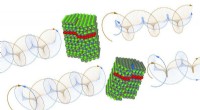
* Definition: These waves do not require a medium to travel. They are made of oscillating electric and magnetic fields.
* Examples:
* Light waves: Visible light, ultraviolet light, infrared light, etc.
* Radio waves: Used for communication.
* Microwaves: Used in ovens.
* X-rays: Used in medical imaging.
* Gamma rays: Emitted by radioactive materials.
Key Differences:
* Medium: Mechanical waves need a medium, while electromagnetic waves do not.
* Particle Vibration: Mechanical waves cause particles to vibrate, while electromagnetic waves involve oscillating fields.
* Speed: Mechanical waves travel at different speeds depending on the medium, while electromagnetic waves travel at the speed of light in a vacuum.
Let me know if you would like to know more about a specific type of wave!