Understanding Centripetal Acceleration
* Definition: Centripetal acceleration is the acceleration that keeps an object moving in a circular path. It always points towards the center of the circle.
* Formula: a_c = v^2 / r
* a_c = centripetal acceleration
* v = speed of the object
* r = radius of the circular path
Finding Maximum Centripetal Acceleration
1. Constant Speed, Varying Radius:
* Scenario: Imagine an object moving in a circular path at a constant speed. The radius of the circle changes.
* Maximum Acceleration: The maximum centripetal acceleration occurs when the radius is smallest.
* Explanation: Since speed is constant, the only factor influencing acceleration is the radius. A smaller radius means the object has to change direction more rapidly, leading to a higher acceleration.
2. Constant Radius, Varying Speed:
* Scenario: An object moves in a circular path with a fixed radius, but its speed changes.
* Maximum Acceleration: The maximum centripetal acceleration occurs when the speed is highest.
* Explanation: The formula (a_c = v^2 / r) clearly shows that acceleration is directly proportional to the square of the speed. A higher speed results in greater acceleration.
3. Circular Motion with Constraints:
* Scenario: The object's motion in a circle is limited by factors like friction, tension in a string, or a specific force.
* Maximum Acceleration: The maximum centripetal acceleration is limited by the maximum force that can be applied to the object.
* Example: A ball attached to a string swinging in a circle. The maximum centripetal acceleration is limited by the tension the string can withstand before breaking.
4. Other Considerations:
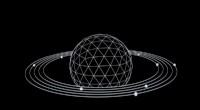
* Gravity: In some cases, gravity can provide the centripetal force. For example, a satellite orbiting Earth. The maximum centripetal acceleration might be limited by the gravitational force at that altitude.
* Work-Energy: If the object is gaining or losing energy, this will affect its speed and, consequently, its centripetal acceleration.
Example: A Car on a Curved Road
* Scenario: A car is traveling on a curved road with a radius of 50 meters. The maximum safe speed for the car on this curve is 20 m/s.
* Finding Maximum Acceleration:
* a_c = (20 m/s)^2 / 50 m
* a_c = 8 m/s^2
Key Points:
* Units: Centripetal acceleration is measured in meters per second squared (m/s²).
* Direction: Centripetal acceleration always points towards the center of the circular path.
* Forces: Centripetal acceleration is caused by a net force acting on the object, directed towards the center of the circle. This force can be provided by various sources, such as tension, gravity, friction, or a combination of forces.
Let me know if you have a specific scenario in mind, and I can help you determine the maximum centripetal acceleration!