The Resulting Wave
When you superimpose two sine waves of equal frequency and amplitude, the resulting wave is also a sine wave. However, the amplitude and phase of the resulting wave depend on the phase difference between the original waves:
* In Phase: If the two waves are in phase (their peaks and troughs align), the resulting wave will have an amplitude that is twice the amplitude of each individual wave.
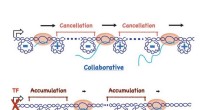
* Out of Phase: If the two waves are out of phase (one wave's peak aligns with the other's trough), the resulting wave will have an amplitude of zero. This means the waves cancel each other out completely.
* Intermediate Phase Difference: For any phase difference between in phase and out of phase, the resulting wave will have an amplitude somewhere between zero and twice the original amplitude. The exact amplitude will depend on the specific phase difference.
What Happens to a Particle
A particle subjected to the resulting wave will oscillate with a frequency equal to the frequency of the original waves. However, the amplitude of the particle's oscillation will depend on the phase difference between the original waves:
* In Phase: The particle will oscillate with an amplitude twice that of each individual wave.
* Out of Phase: The particle will not oscillate at all.
* Intermediate Phase Difference: The particle will oscillate with an amplitude somewhere between zero and twice the original amplitude, depending on the phase difference.
Key Concepts
* Superposition: When waves meet, their amplitudes add together.
* Phase Difference: The difference in the starting position (phase) of two waves.
* Amplitude: The maximum displacement of a wave from its equilibrium position.
Visualizing the Effect
You can visualize this phenomenon by imagining two ropes tied together at one end. If you shake both ropes at the same frequency and amplitude, the waves will travel down the ropes and combine. The resulting wave will depend on how the ropes are shaken relative to each other.
Let me know if you would like me to elaborate on any specific aspect or provide a more detailed mathematical explanation!