1. Magnitude: Force has a size or strength, which is measured in units of Newtons (N) in the International System of Units (SI).
2. Direction: Force has a specific direction in which it acts. This is crucial because force is a vector quantity, meaning it has both magnitude and direction.
3. Point of Application: Force is applied to a specific point on an object. This point is where the force's influence is concentrated.
4. Contact vs. Non-Contact:
* Contact forces involve direct physical contact between objects. Examples include pushing, pulling, friction, and normal force.
* Non-contact forces act at a distance without any physical contact. Examples include gravity, magnetism, and electrostatic forces.
5. Effects: Force can cause several effects on objects, including:
* Acceleration: Force causes a change in an object's velocity, either speeding it up, slowing it down, or changing its direction.
* Deformation: Force can cause an object to change its shape or size.
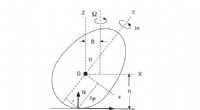
* Rotation: Force can cause an object to rotate around an axis.
6. Interaction: Force always involves an interaction between at least two objects. For example, when you push a box, you are exerting a force on the box, and the box exerts an equal and opposite force on you. This is known as Newton's Third Law of Motion.
7. Vector Addition: Multiple forces acting on an object can be combined using vector addition. This results in a single net force that determines the object's overall motion.
8. Types of Forces: There are many different types of forces in physics, each with its own characteristics and behavior. Some examples include:
* Gravitational force: Attraction between objects with mass.
* Electromagnetic force: Interaction between electrically charged particles.
* Strong nuclear force: Holds the nucleus of an atom together.
* Weak nuclear force: Involved in radioactive decay.
Understanding these characteristics is crucial for understanding how forces work and how they influence the motion and behavior of objects in the world around us.