Here's a breakdown of key concepts:
1. Quantization:
- This means that energy, momentum, and other quantities can only exist in specific, discrete values.
- Imagine a staircase instead of a ramp: You can only be on a specific step, not in between.
2. Wave-Particle Duality:
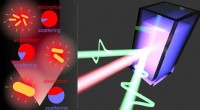
- Light and matter exhibit both wave-like and particle-like properties.
- This means that a particle, like an electron, can behave like a wave, and a wave, like light, can behave like a particle.
3. Superposition:
- A quantum system can exist in multiple states simultaneously.
- For example, an electron can be in two places at the same time until it's observed.
4. Entanglement:
- Two or more quantum particles can be linked together, even if they are separated by large distances.
- Measuring the state of one particle instantly affects the state of the other, no matter how far apart they are.
5. Uncertainty Principle:
- It's impossible to know both the position and momentum of a particle with perfect accuracy.
- The more accurately you measure one, the less accurately you can measure the other.
Implications:
- Quantum physics explains the behavior of atoms and subatomic particles.
- It has revolutionized our understanding of the universe and led to technologies like lasers, transistors, and nuclear weapons.
In essence, quantum physics challenges our intuitive understanding of the world and reveals a reality that is fundamentally different from what we experience in everyday life.