Here's how it works:
* Momentum, Not Mass: While photons don't have rest mass, they do have momentum. Momentum is a measure of an object's mass in motion, and it's given by the equation:
Momentum (p) = mass (m) × velocity (v)
Since photons travel at the speed of light (c), they do have momentum, even though they have no rest mass. This momentum is calculated using the following equation:
Momentum (p) = Energy (E) / speed of light (c)
* Force and Momentum: Force is defined as the rate of change of momentum. This means that even though photons have no mass, they can still exert force because they carry momentum.
* The Photoelectric Effect: One example of photons exerting force is the photoelectric effect. When a photon strikes a metal surface, it can transfer its energy to an electron, causing it to be ejected from the metal. This transfer of momentum from the photon to the electron demonstrates that photons can exert force.
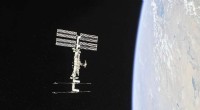
* Radiation Pressure: Another example is radiation pressure. When photons collide with a surface, they transfer some of their momentum to the surface, causing a force to be exerted. This is how solar sails work – they use the pressure from sunlight to propel spacecraft through space.
* The Electromagnetic Force: Phons are carriers of the electromagnetic force. This force is responsible for interactions between charged particles, such as electrons and protons. When a photon interacts with a charged particle, it can transfer momentum to the particle, causing it to accelerate.
In conclusion, while photons have no rest mass, they carry momentum and are capable of exerting force through various mechanisms like the photoelectric effect and radiation pressure. These concepts are fundamental to understanding how light interacts with matter and the nature of the electromagnetic force.