1. Electromagnetic Radiation:
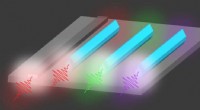
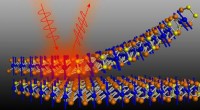
* Most importantly, it produces electromagnetic radiation. This is because accelerating charges (and vibrating is a form of acceleration) emit electromagnetic waves.
* The type of radiation (radio waves, infrared, visible light, ultraviolet, X-rays, gamma rays) depends on the frequency of the vibration.
* This is the fundamental principle behind how radio antennas, light bulbs, and even lasers work.
2. Heat:
* Vibrating particles can transfer energy to their surroundings, leading to an increase in temperature. This is known as Joule heating.
* This is the principle behind how electric heaters work.
3. Interaction with Other Charged Particles:
* The vibrating charge can exert forces on other nearby charged particles. This is due to the electromagnetic field produced by the vibrating charge.
* This interaction can lead to a variety of phenomena, including:
* Electric currents: If the vibrating charge is part of a conductor, it can induce a current in the conductor.
* Magnetic fields: The vibrating charge creates a time-varying magnetic field, which can interact with other magnetic materials.
4. Quantum Effects:
* In the quantum realm, the vibration of charged particles can lead to more complex phenomena, such as the emission and absorption of photons.
In summary:
The vibration of an electrically charged particle is a fundamental process that has a wide range of implications in physics, engineering, and technology. It produces electromagnetic radiation, heat, interactions with other charged particles, and quantum effects, all of which are essential for understanding how our world works.