1. The Medium:
* Mechanical waves need a medium to travel through. This medium can be a solid, liquid, or gas.
* Examples:
* Sound waves travel through air (gas)
* Water waves travel through water (liquid)
* Seismic waves travel through the Earth (solid)
2. The Disturbance:
* The disturbance is any change in the medium that causes particles within the medium to move.
* Examples:
* Sound: A vibrating object, like a drumhead, creates pressure changes in the air, causing air molecules to vibrate.
* Water Waves: Dropping a pebble in water creates a disturbance that propagates outward.
* Seismic Waves: Earthquakes cause a sudden displacement of the Earth's crust, creating waves that travel through the Earth.
3. Wave Propagation:
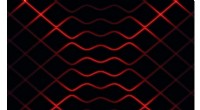
* The disturbance causes the particles in the medium to vibrate or move, transferring energy to neighboring particles.
* These neighboring particles then transmit the disturbance further, leading to a wave-like motion.
* The disturbance itself does not travel, but rather the energy it carries propagates through the medium.
In summary:
Mechanical wave motion begins when a disturbance in a medium causes particles within that medium to oscillate or move, transferring energy from one particle to the next, resulting in a wave-like propagation of energy through the medium.