Classical Physics:
* Mechanics: The study of motion and its causes (forces, energy, momentum).
* Kinematics: Describing motion without considering the forces involved.
* Dynamics: Studying the relationship between forces and motion.
* Statics: Study of objects at rest or in equilibrium.
* Thermodynamics: The study of heat and its relation to other forms of energy.
* Electromagnetism: The study of electricity and magnetism, which are two aspects of the same fundamental force.
* Optics: The study of light and its properties.
* Acoustics: The study of sound and its properties.
Modern Physics:
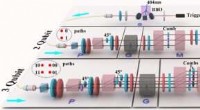
* Quantum Mechanics: The study of the behavior of matter at the atomic and subatomic levels.
* Atomic Physics: The study of atoms, their structure, and their interaction with radiation.
* Nuclear Physics: The study of the nucleus of the atom and its properties.
* Particle Physics: The study of the fundamental particles that make up matter and the forces that govern their interactions.
* Astrophysics: The study of celestial objects and phenomena.
* Cosmology: The study of the origin, evolution, and structure of the universe.
* Relativity: The study of gravity and spacetime, including Einstein's theories of special and general relativity.
Other Branches:
* Biophysics: The study of biological systems using the principles and methods of physics.
* Geophysics: The study of the Earth's physical properties and processes.
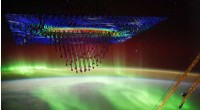
* Plasma Physics: The study of plasma, a state of matter composed of charged particles.
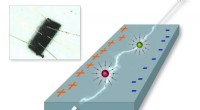
* Condensed Matter Physics: The study of the physical properties of solids and liquids.
This is not an exhaustive list, and there are many other areas of specialization within physics. It's important to note that there is often significant overlap between these branches, and they are constantly evolving and interacting with each other.