1. Explore Physical Phenomena:
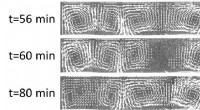
- Observe and study various physical phenomena, such as motion, heat, light, electricity, magnetism, and nuclear physics.
- Test theories and laws of physics through practical experiments.
2. Develop Experimental Skills:
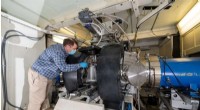
- Learn how to design, set up, and conduct experiments using scientific equipment and techniques.
- Analyze data, draw conclusions, and communicate findings effectively.
3. Utilize Specialized Equipment:
- Access a wide range of specialized equipment, including:
- Oscilloscopes
- Spectrometers
- Lasers
- Power supplies
- Sensors
- Data acquisition systems
4. Enhance Learning and Understanding:
- Provide hands-on experience that complements theoretical knowledge.
- Foster critical thinking, problem-solving, and analytical skills.
5. Conduct Research and Innovation:
- Support scientific research in various areas of physics, such as:
- Material science
- Nanotechnology
- Astrophysics
- Quantum mechanics
Typical Features of a Physics Lab:
- Workstations: Dedicated spaces for conducting experiments, equipped with tables, benches, and electrical outlets.
- Safety Features: Emergency showers, eyewash stations, fire extinguishers, and proper ventilation.
- Storage: Cabinets and shelves for storing equipment, chemicals, and supplies.
- Computer Systems: Data analysis software, simulations, and online resources.
- Whiteboards/Blackboards: For writing down observations, equations, and diagrams.
Examples of Experiments Conducted in a Physics Lab:
- Measuring the acceleration due to gravity.
- Investigating the properties of light through diffraction and interference.
- Determining the resistance of a resistor using Ohm's law.
- Studying the behavior of magnets and magnetic fields.
Physics labs are essential for both academic and industrial settings, enabling the advancement of scientific knowledge and technological innovation.