Physics, the study of the fundamental constituents of the universe and their interactions, encompasses a vast and intricate web of knowledge. Here's a breakdown of some key branches:
1. Classical Mechanics:
* Focus: Motion of macroscopic objects (larger than atoms) governed by Newton's laws of motion.
* Key Concepts: Force, mass, momentum, energy, work, power, torque, angular momentum, gravity.
* Examples: Studying the motion of planets, projectiles, or cars.
2. Electromagnetism:
* Focus: Interactions between electric charges and magnetic fields.
* Key Concepts: Electric charge, electric field, magnetic field, electromagnetic force, Maxwell's equations.
* Examples: Understanding electricity, magnetism, light, and radio waves.
3. Thermodynamics:
* Focus: Heat, temperature, and their relation to energy and work.
* Key Concepts: Entropy, enthalpy, heat transfer, laws of thermodynamics.
* Examples: Understanding heat engines, refrigerators, and the behavior of gases.
4. Optics:
* Focus: The behavior of light, including its reflection, refraction, diffraction, and interference.
* Key Concepts: Waves, wavefronts, Huygens' principle, lenses, mirrors.
* Examples: Designing cameras, telescopes, and microscopes.
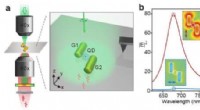
5. Quantum Mechanics:
* Focus: The behavior of matter and energy at the atomic and subatomic level.
* Key Concepts: Quantization of energy, wave-particle duality, uncertainty principle, quantum entanglement.
* Examples: Explaining the behavior of atoms, lasers, and semiconductors.
6. Nuclear Physics:
* Focus: The structure, properties, and interactions of atomic nuclei.
* Key Concepts: Radioactive decay, nuclear fission, nuclear fusion.
* Examples: Understanding nuclear weapons, nuclear power plants, and the origin of elements.
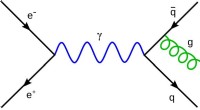
7. Particle Physics:
* Focus: The fundamental particles that make up matter and their interactions.
* Key Concepts: Quarks, leptons, bosons, Standard Model, particle accelerators.
* Examples: Searching for new particles and understanding the fundamental forces of nature.
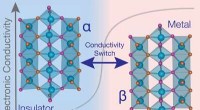
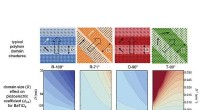
8. Condensed Matter Physics:
* Focus: The properties of matter in its various states, including solids, liquids, and gases.
* Key Concepts: Crystals, semiconductors, superfluidity, superconductivity.
* Examples: Developing new materials with specific properties like superconductivity or high-temperature resistance.
9. Astrophysics:
* Focus: The study of celestial objects and phenomena, such as stars, planets, galaxies, and the universe as a whole.
* Key Concepts: Gravity, black holes, cosmology, general relativity.
* Examples: Studying the formation and evolution of stars and galaxies.
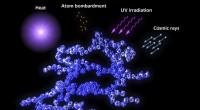
10. Biophysics:
* Focus: Applying physics principles to biological systems and processes.
* Key Concepts: Molecular dynamics, cell mechanics, bioelectricity, bioimaging.
* Examples: Understanding how proteins fold, how muscles contract, and how cells communicate.
This list is not exhaustive, but it provides a good overview of the major branches of physics. It's important to note that many of these branches overlap and interact with each other, creating a complex and interconnected field of study.