Strong Intermolecular Forces:
* Covalent bonds: In solids like diamond and quartz, atoms share electrons to form strong covalent bonds. These bonds are the strongest type, leading to very high melting points and hardness.
* Ionic bonds: In ionic solids like table salt, oppositely charged ions attract each other strongly. These electrostatic interactions are also quite strong, giving these solids high melting points.
* Metallic bonds: Metals have a unique bonding where electrons are delocalized and shared throughout the entire structure. This results in strong attraction and allows for excellent electrical and thermal conductivity.
* Hydrogen bonds: In many solids, hydrogen atoms form special bonds with highly electronegative atoms like oxygen and nitrogen. These bonds are weaker than covalent or ionic bonds but still significantly stronger than Van der Waals forces.
* Van der Waals forces: Even non-polar molecules exhibit weak attractions due to temporary fluctuations in electron density. These forces are much weaker than covalent, ionic, or hydrogen bonds, but they still play a role in holding solid particles together.
Fixed Arrangement:
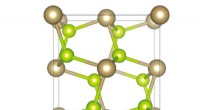
* Particles in a solid are arranged in a highly ordered, repeating pattern called a crystal lattice.
* This regular structure gives solids their definite shape and volume.
Limited Movement:
* While particles in a solid vibrate around their fixed positions, they cannot move freely like those in a liquid or gas.
* This limited movement is why solids have a high density compared to liquids and gases.
Key takeaway: The strong intermolecular forces that bind particles in a fixed arrangement and restrict their movement are what make matter solid.