Here's a simplified explanation:
1. Quantum Mechanics: In the quantum world, particles like electrons are described by wave functions. These wave functions have certain properties, including spin.
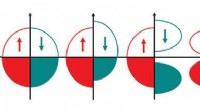
2. Spin Angular Momentum: Spin angular momentum is a fundamental property of particles, and it's analogous to the angular momentum of a spinning object in classical physics. However, unlike a spinning object, the spin of an electron is quantized, meaning it can only take on specific values.
3. Magnetic Dipole Moment: Due to its spin angular momentum, an electron acts as a tiny magnetic dipole. A dipole has two poles, a north and a south, and generates a magnetic field similar to a bar magnet.
4. Magnetic Field Generation: The electron's spin is responsible for the magnetic field it generates. This field is very weak but can be observed and measured using various techniques.
Key Points:
* Electrons don't physically spin like a top. Spin is a quantum property.
* Spin angular momentum is quantized, meaning it can only take on specific values.
* An electron's spin creates a magnetic dipole moment, making it behave like a tiny magnet.
This property of electrons is crucial for understanding various phenomena, including:
* Magnetism in materials: The magnetic properties of materials arise from the alignment of electron spins.
* Spectroscopy: Spin can be used to study the structure of atoms and molecules.
* Electronics: Spintronics is a field that explores the use of electron spin for developing new electronic devices.
The concept of spin angular momentum is a complex one, but hopefully this explanation helps you understand why electrons behave like tiny magnets.