Dense materials generally make it harder for light to pass through. This is because:
* Increased interaction with atoms: Denser materials have more atoms packed together in a smaller space. This means light photons have a higher chance of colliding with atoms, leading to:
* Absorption: The light's energy can be absorbed by the atoms, converting it into heat or other forms of energy. This is why dark objects tend to get hotter in sunlight.
* Scattering: Photons can bounce off atoms, changing their direction of travel. This is why you can't see through a dense fog, for example.
* Higher refractive index: Dense materials typically have a higher refractive index. This means that light slows down when it enters the material and bends as it passes through. The higher the refractive index, the more the light bends.
However, it's not always about blocking light:
* Transparency: Some dense materials, like glass or water, are transparent. This means that they allow most visible light to pass through without significant absorption or scattering. They still have a high refractive index, which is why you see objects through them distorted.
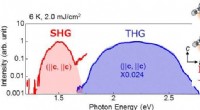
* Different wavelengths: Some materials are opaque to visible light but transparent to other wavelengths, like ultraviolet or infrared. For example, glass is transparent to visible light but blocks most UV rays.
In summary:
* Dense materials generally make it harder for light to pass through due to increased interactions with atoms.
* However, transparency depends on the specific material and the wavelength of light.
* Dense materials can be transparent to some wavelengths while opaque to others.
It's important to remember that this is a simplification. The interaction of light with matter is a complex phenomenon with many factors at play.