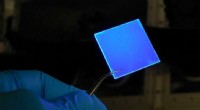
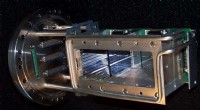
* The Photoelectric Effect: This effect occurs when light strikes a metal surface, causing electrons to be emitted.
* Classical Wave Theory Fails: Classical wave theory predicts that light of any frequency, as long as it's intense enough, should be able to eject electrons. However, experiments showed that only light above a certain threshold frequency, regardless of intensity, could cause electron emission.
* Einstein's Explanation: Albert Einstein explained this by proposing that light consists of discrete packets of energy called photons. The energy of a photon is directly proportional to its frequency.
* Key Observations:
* Threshold Frequency: Electrons are only emitted when the frequency of light exceeds a certain threshold value.
* No Time Lag: Electron emission happens almost instantaneously, even with low light intensity, contradicting the wave theory prediction of a time lag for energy build-up.
* Kinetic Energy of Electrons: The kinetic energy of the emitted electrons is directly proportional to the frequency of light, not its intensity.
In Summary: The photoelectric effect demonstrates the particle nature of light because:
1. It requires a minimum frequency (energy) of light to eject electrons, not just high intensity.
2. It exhibits an instantaneous response, not a delayed one.
3. The kinetic energy of emitted electrons is linked to the frequency, supporting the concept of discrete energy packets (photons).