1. In-Phase Waves:
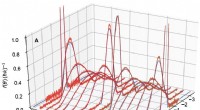
* Result: The two waves will reinforce each other, creating a new standing wave with a larger amplitude. The antinodes of the combined wave will be higher, and the nodes will remain at the same locations. This is called constructive interference.
2. Out-of-Phase Waves:
* Result: The two waves will cancel each other out, resulting in a wave with a smaller amplitude or even zero amplitude. This is called destructive interference.
3. Partially Out-of-Phase Waves:
* Result: The two waves will create a new standing wave with an amplitude between the fully constructive and destructive cases. The amplitude and location of the nodes and antinodes will change based on the degree of phase difference.
Important Considerations:
* The Boundary Conditions: The type of standing wave that forms depends on the boundary conditions of the medium in which the waves are traveling (e.g., fixed ends, open ends).
* The Medium: The properties of the medium, such as its density and elasticity, will affect the amplitude and wavelength of the standing wave.
* The Amplitude of the Waves: The amplitude of the individual waves will also influence the amplitude of the resulting standing wave.
Example:
Imagine two identical guitar strings vibrating at the same frequency. If they are plucked in sync, the resulting sound will be louder than if they are plucked slightly out of sync. This is because the waves are interfering constructively in the first scenario and partially destructively in the second.
In summary, the response of a standing wave to another of the same frequency depends critically on their phase relationship. The waves can reinforce each other, cancel each other out, or create a new standing wave with an intermediate amplitude based on their phase difference.