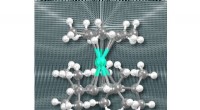
What it means:
* No energy loss: In frictionless motion, there's no energy loss due to friction. This means an object in motion will continue moving at a constant speed forever, without slowing down.
* No resistance: There's no force pushing back against the object's movement. This applies to both linear (straight-line) and rotational (spinning) motion.
Why it's important:
* Understanding basic principles: Frictionless motion is a simplified model used to understand the fundamental principles of motion, like Newton's laws of motion. It helps us isolate the effects of forces and analyze how objects behave in ideal scenarios.
* Theoretical basis for other models: While frictionless motion doesn't exist in reality, it serves as a theoretical basis for more complex models that account for friction. These models help us understand and predict the behavior of objects in real-world situations.
* Development of technology: Scientists and engineers use the concept of frictionless motion to design and improve various technologies, like:
* Ball bearings: Minimize friction in machinery.
* Air bearings: Support objects with a thin layer of air to reduce friction.
* Superconducting magnets: Create frictionless levitation in maglev trains.
In reality, frictionless motion does not exist:
* Air resistance: Even in a vacuum, there's still some resistance from the air molecules.
* Internal friction: Even within a solid object, there's friction between its molecules.
However, we can approximate frictionless motion in some scenarios:
* Lubricants: Oil or grease can significantly reduce friction between surfaces.
* Low-friction surfaces: Materials like Teflon have very low coefficients of friction.
In conclusion, frictionless motion is a theoretical concept used to understand the fundamental principles of motion. While it doesn't exist in reality, it's a powerful tool for understanding and predicting the behavior of objects in real-world situations.