Examples:
* Wood: Stronger along the grain than across it.
* Muscles: Stronger in the direction of the muscle fibers.
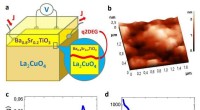
* Graphene: Conducts electricity better along the plane of the sheet than perpendicular to it.
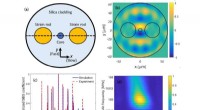
* Quartz: Has different refractive indices for light depending on the direction of propagation.
In contrast, an isotropic material has the same properties in all directions.
Key characteristics of anisotropic materials:
* Direction-dependent properties: The material's behavior is not uniform in all directions.
* Directional strength: Can be stronger in one direction than another.
* Directional elasticity: Can deform differently in different directions.
* Directional conductivity: Can conduct heat or electricity differently in different directions.
Applications of anisotropic materials:
* Structural engineering: Designing buildings and bridges that are strong in specific directions.
* Electronics: Creating materials with specific electrical properties for use in transistors, LEDs, and other devices.
* Optics: Designing lenses and other optical components with specific light-bending properties.
* Biomaterials: Developing materials with specific properties for use in medical implants and prosthetics.
Note: Anisotropy is a common phenomenon in nature, but it can also be engineered into materials. For example, composite materials, such as fiberglass and carbon fiber, are often designed to be anisotropic for specific applications.