1. The nature of the wave:
* Mechanical Waves: These waves require a medium to travel through (like sound waves in air or water waves). They interact with the obstacle or medium based on the properties of both the wave and the material.
* Electromagnetic Waves: These waves can travel through a vacuum and don't require a medium (like light waves). Their interaction with obstacles and mediums depends on the properties of the wave (frequency, wavelength) and the material it encounters.
2. The size of the obstacle relative to the wavelength:
* Large Obstacles: When the obstacle is significantly larger than the wavelength, the wave will be blocked and reflected. This is why sound waves bend around large obstacles but are blocked by walls.
* Small Obstacles: If the obstacle is much smaller than the wavelength, the wave will diffract, meaning it will bend around the obstacle. This is why you can hear sounds around corners even if you can't see the source.
3. The properties of the medium:
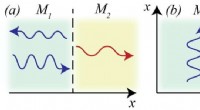
* Different Mediums: When a wave passes from one medium to another (e.g., light moving from air to water), its speed and direction can change. This is called refraction. The amount of refraction depends on the properties of both mediums.
* Absorption: Some mediums absorb waves, converting the wave energy into other forms, like heat. This is why sound is quieter in a padded room.
Here's a breakdown of common wave behaviors:
* Reflection: The wave bounces back from the obstacle, changing direction but maintaining its speed and frequency. Think of a ball bouncing off a wall.
* Refraction: The wave changes direction as it enters a new medium, with a change in speed. Think of light bending as it enters water.
* Diffraction: The wave bends around the obstacle, spreading out as it passes through an opening. Think of sound waves bending around corners.
* Interference: Two or more waves can interact with each other. Constructive interference leads to an increase in amplitude, while destructive interference leads to a decrease in amplitude.
Examples:
* Sound waves: When you hear a sound from behind a wall, the sound waves are diffracting around the wall. If you put your ear against the wall, you hear the sound more clearly because the sound waves are being transmitted through the wall.
* Light waves: When you look at a straw in a glass of water, it appears bent at the water surface. This is because the light waves are refracting as they pass from the air into the water.
It's important to remember that the behavior of waves is complex and can be influenced by multiple factors. However, understanding the basics of reflection, refraction, diffraction, and interference can help you understand how waves behave in different situations.