Here's why:
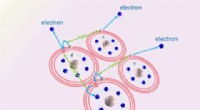
* Atoms and molecules are in constant motion: They vibrate, rotate, and translate (move from one place to another).
* Temperature is a measure of this motion: The higher the temperature, the faster the particles move.
* Even solid objects have moving particles: The particles in a solid are tightly packed and vibrate in place, but they still have kinetic energy.
Types of motion:
* Translation: Movement of the entire molecule from one location to another.
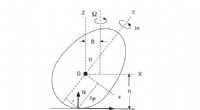
* Rotation: Rotation of the molecule around its axis.
* Vibration: Movement of atoms within a molecule, like a spring.
Exceptions:
* Absolute zero: Theoretically, at absolute zero (-273.15 °C or 0 Kelvin), all atomic and molecular motion would cease. However, absolute zero has never been reached in practice.
* Quantum effects: At very low temperatures, quantum mechanics can lead to some unusual behaviors that might seem like "stopped motion" but are still subject to underlying quantum principles.
In summary: While we may not always see it, the matter around us is constantly in motion at the microscopic level. This constant movement is essential for many physical processes, including heat transfer, chemical reactions, and the very existence of gases, liquids, and solids.