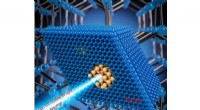
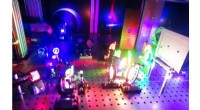
* Light is an electromagnetic wave: Light is a form of electromagnetic radiation, meaning it travels as oscillating electric and magnetic fields.
* There are four fundamental forces in physics: These are:
* Strong nuclear force: This force holds the nucleus of atoms together.
* Weak nuclear force: Responsible for radioactive decay.
* Electromagnetic force: This force governs interactions between charged particles, including the generation and propagation of light.
* Gravitational force: The force of attraction between objects with mass.
Light itself is not a force; it's a form of energy that can interact with matter via the electromagnetic force.
If you are interested in specific aspects of light, here are some things to consider:
* The electromagnetic spectrum: This covers a vast range of electromagnetic radiation, including visible light, radio waves, microwaves, infrared radiation, ultraviolet radiation, X-rays, and gamma rays.
* Properties of light: Light has various properties like wavelength, frequency, and polarization that affect how it interacts with matter.
* Light and matter interactions: Light can be reflected, absorbed, refracted, diffracted, and scattered by matter.
Let me know if you have a more specific question about light, and I'll be happy to help!