Understanding the Basics
* Velocity: Velocity describes both the speed and direction of an object's motion. It's measured in units like meters per second (m/s) or kilometers per hour (km/h).
* Initial Velocity (vᵢ): The velocity of an object at the beginning of its motion.
* Final Velocity (vƒ): The velocity of an object at the end of its motion.
Methods to Find Final and Initial Velocities
1. Using Constant Acceleration:
* Formula: vƒ = vᵢ + at
* vƒ = final velocity
* vᵢ = initial velocity
* a = acceleration
* t = time
* Example: A car starts from rest (vᵢ = 0 m/s) and accelerates at 2 m/s² for 5 seconds. Its final velocity is:
* vƒ = 0 + (2 m/s²)(5 s) = 10 m/s
2. Using Displacement, Time, and Acceleration:
* Formula: vƒ² = vᵢ² + 2as
* vƒ = final velocity
* vᵢ = initial velocity
* a = acceleration
* s = displacement (change in position)
* Example: A ball is thrown upwards with an initial velocity of 15 m/s. It reaches a maximum height of 10 meters. What is its final velocity just before hitting the ground?
* vᵢ = 15 m/s
* a = -9.8 m/s² (acceleration due to gravity)
* s = -10 m (displacement is negative because it's moving downwards)
* vƒ² = 15² + 2(-9.8)(-10) = 445
* vƒ = √445 ≈ 21.1 m/s (the negative root is chosen because the velocity is downward)
3. Using Conservation of Mechanical Energy:
* Formula: KEᵢ + PEᵢ = KEƒ + PEƒ
* KE = kinetic energy (1/2 * mv²)
* PE = potential energy (mgh for gravitational potential energy)
* i = initial state
* f = final state
* Example: A roller coaster starts from rest at a height of 50 meters. What is its final velocity at the bottom of the track (assuming no friction)?
* vᵢ = 0 m/s
* hᵢ = 50 m
* hƒ = 0 m
* 0 + mghᵢ = 1/2 * mvƒ² + 0
* vƒ = √(2ghᵢ) = √(2 * 9.8 * 50) ≈ 31.3 m/s
4. Using Graphs:
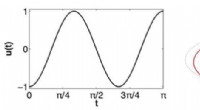
* Velocity-Time Graphs: The slope of a velocity-time graph represents acceleration. The area under the curve represents displacement. You can find initial and final velocities by reading the y-axis values at the beginning and end of the time interval.
* Displacement-Time Graphs: The slope of a displacement-time graph represents velocity. You can find initial and final velocities by calculating the slopes at the beginning and end of the time interval.
Key Considerations
* Units: Always make sure your units are consistent.
* Direction: Pay attention to the direction of motion, as velocity is a vector quantity. Positive and negative values indicate different directions.
* Assumptions: Some of the formulas above assume constant acceleration or ignore factors like air resistance.
Let me know if you have a specific problem or scenario you'd like to work through!