* Newton's Laws are Fundamental: These laws describe the fundamental principles of motion and how forces interact with objects. They are not bound to any specific location or environment.
* No Air Resistance: While air resistance is a significant factor on Earth, it is practically non-existent in the vacuum of space. This means objects in space experience less friction and can maintain their motion for much longer.
* Gravity Still Exists: Though weaker, gravity is still present in space. It's the force that holds planets in orbit around stars and keeps galaxies together.
* Inertia Rules: Newton's First Law (Inertia) still applies. Objects in motion stay in motion at a constant speed and direction unless acted upon by a force. This is why spacecraft need thrusters to change their course or speed.
* Force = Mass x Acceleration: Newton's Second Law still dictates how objects respond to forces. This is crucial for calculating the trajectory of spacecraft and for maneuvering them in space.
Examples:
* Satellites in Orbit: Satellites stay in orbit due to a balance of gravity and their forward motion. Gravity pulls them towards Earth, while their inertia keeps them moving forward.
* Spacecraft Maneuvers: Spacecraft use thrusters to apply forces, changing their velocity and direction. They rely on Newton's Second Law to calculate the amount of force needed.
* Space Debris: Debris in space continues to orbit Earth, affected by gravity and the occasional collision. This illustrates the continued presence of Newton's Laws.
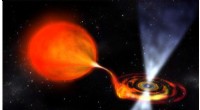
Note: While Newton's Laws provide a great foundation, they aren't perfect for describing all aspects of motion in extreme environments like near black holes or at extremely high speeds. In those cases, Einstein's theory of Relativity is required.