1. Gravitational Force:
* Decreases: Gravitational force between two objects is inversely proportional to the square of the distance between them. This means if you double the distance, the force becomes four times weaker. Think of the Earth's gravity; it gets weaker the farther you are from the planet's center.
2. Electromagnetic Force:
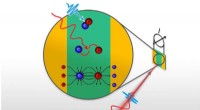
* Decreases: Electromagnetic forces (both electric and magnetic) also follow an inverse square law. The force between two charged particles, or between a magnet and a piece of metal, weakens rapidly as the distance between them increases.
3. Spring Force:
* Increases: The force exerted by a spring is directly proportional to the distance it is stretched or compressed from its resting position (Hooke's Law). So, as you stretch a spring further, the force it exerts on you increases.
4. Contact Forces:
* Can increase or decrease: Contact forces like friction or the normal force depend on the specific situation. For example, the force of friction might increase initially as you push an object harder, but eventually, it will reach a maximum value. The normal force exerted by a surface on an object can increase if the object is pushed harder against the surface.
In Summary:
* Inverse Square Law: Gravitational and electromagnetic forces decrease rapidly as distance increases.
* Direct Proportionality: Spring force increases as distance increases.
* Contact Forces: The relationship between contact forces and distance is more complex and depends on the specific force involved.
Important Note: The above explanations are simplified and apply in most cases. However, the actual relationship between force and distance can be more complex in some situations, especially in more advanced physics scenarios.