Understanding the Relationship
* Velocity of Light: The speed of light in a vacuum is the fastest speed at which information can travel. We denote it as 'c' and it's approximately 3 x 10^8 meters per second.
* Permittivity: Permittivity (ε) describes how well a material can store electric energy. Relative permittivity (εr) compares a material's permittivity to that of a vacuum. A higher relative permittivity means the material stores more electric energy.
* Wave Velocity: The velocity of an electromagnetic wave (like the one travelling through a cable) is affected by the permittivity of the medium.
The Formula
The velocity (v) of an electromagnetic wave in a material is given by:
v = c / √εr
Calculation
1. Relative Permittivity: εr = 9
2. Speed of Light: c = 3 x 10^8 m/s
3. Calculate Velocity:
v = (3 x 10^8 m/s) / √9
v = (3 x 10^8 m/s) / 3
v = 1 x 10^8 m/s
Answer
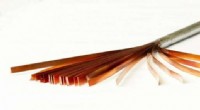
The velocity of the travelling wave through the cable with a relative permittivity of 9 is 1 x 10^8 meters per second.
Important Note: This calculation assumes the cable is a perfect dielectric with no losses. In real-world cables, factors like conductor resistance and dielectric losses can slightly reduce the wave velocity.