Here's a breakdown of how light travels:
Light as a Wave:
* Electromagnetic Waves: Light is a form of electromagnetic radiation, meaning it travels as a wave of oscillating electric and magnetic fields. These fields are perpendicular to each other and to the direction of the wave's propagation.
* Wavelength and Frequency: Light waves have a specific wavelength (the distance between two crests) and frequency (the number of waves passing a point per second). These properties determine the color of light we see.
* Diffraction and Interference: Light exhibits wave-like behavior through phenomena like diffraction (bending around obstacles) and interference (superposition of waves creating patterns of constructive and destructive interference).
Light as a Particle:
* Photons: Light also acts as a stream of tiny packets of energy called photons. These photons have no mass but carry momentum.
* Photoelectric Effect: The photoelectric effect, where light can eject electrons from a metal surface, is evidence of light's particle nature. The energy of the photons determines the kinetic energy of the ejected electrons.
* Compton Scattering: In Compton scattering, photons can collide with electrons, transferring energy and momentum, further demonstrating their particle-like behavior.
How light travels in straight lines:
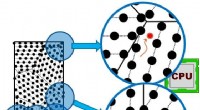
While light can act like a wave and exhibit diffraction and interference, it generally travels in straight lines. This is because light interacts with matter through absorption and re-emission. When a photon encounters a material, it can be absorbed by an atom or molecule, causing the atom to become excited. The excited atom will then re-emit a new photon in a random direction. The net effect of these interactions is that light travels in a straight line, with only slight deviations due to scattering.
In summary:
Light exhibits both wave and particle properties. Its wave-like nature explains diffraction and interference, while its particle-like nature is responsible for phenomena like the photoelectric effect and Compton scattering. While light can bend around obstacles and interfere with itself, it generally travels in straight lines due to its interactions with matter.