Understanding Magnetic Moments
* Electrons as Tiny Magnets: Electrons in atoms have a property called "spin," which creates a tiny magnetic moment. Think of it like a tiny bar magnet spinning on its axis.
* Net Magnetic Moment: The magnetic moments of individual electrons in an atom can either cancel each other out or add up, creating a net magnetic moment for the atom as a whole.
Paramagnetism and Ferromagnetism
* Paramagnetism: In paramagnetic materials, atoms have weak magnetic moments that are randomly oriented. When an external magnetic field is applied, these moments tend to align slightly with the field, leading to a weak overall magnetization.
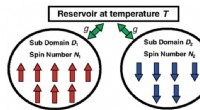
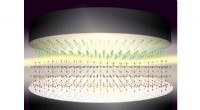
* Ferromagnetism: Ferromagnetic materials, like iron, have strong magnetic moments that are aligned within domains. These domains are regions where the magnetic moments of individual atoms are all pointing in the same direction.
High Energy State and Alignment
* Anti-Alignment: In a strong external magnetic field, the high energy state for an atom's magnetic moment is actually when it's aligned *against* the applied field direction. This is because the magnetic moment interacts with the field, and the opposing alignment represents a higher energy state.
* Why Opposing Alignment is High Energy: Think of two magnets. If you try to push their north poles together, you have to do work to overcome the repulsion. This is similar to the situation with an atom's magnetic moment: pushing it against the field requires energy input.
Thermal Energy's Role
* Thermal Agitation: At room temperature, atoms are constantly jiggling around due to thermal energy. This thermal agitation can disrupt the alignment of magnetic moments, even in materials that are strongly magnetized.
* Temperature Dependence: The degree of alignment is temperature-dependent. As temperature increases, thermal energy becomes more significant, and the alignment of magnetic moments weakens.
Key Points
* The high energy state for an atom's magnetic moment is when it's aligned against the applied magnetic field.
* This opposing alignment is due to the interaction between the magnetic moment and the field.
* Thermal energy can disrupt the alignment, leading to temperature dependence in the magnetization of materials.
Let me know if you'd like more details on any of these concepts!