1. Balanced Charges:
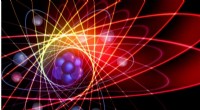
* Atoms are made up of positively charged protons in the nucleus and negatively charged electrons orbiting around. In most materials, these charges are perfectly balanced.
* The positive and negative charges cancel each other out, resulting in a net neutral charge. This is why most materials appear electrically neutral, even though they contain a tremendous amount of electrical charge.
2. Hidden Charge Distribution:
* Even if a material appears neutral overall, the charge distribution within it can be uneven.
* This can happen due to various factors, including:
* Polarization: Some materials can become polarized, meaning their electrons are shifted slightly within their atoms, creating a separation of charge within the material. This happens when the material is exposed to an electric field.
* Impurities: The presence of impurities or defects in the material can also create regions of localized charge.
* Non-uniformity: The distribution of atoms within the material might not be completely homogeneous, leading to small regions with different charge densities.
3. "Neutral" Doesn't Mean "No Charge":
* A material can appear neutral at a macroscopic level (the level we observe), but it might still have microscopic charges within it.
* Think of a magnet: It has no overall charge, but it exerts magnetic forces due to the alignment of its magnetic dipoles. Similarly, materials can have internal charge distributions that don't manifest as observable forces until acted upon by external forces.
Examples:
* Insulators: They generally have a high resistance to electrical current flow. However, they can become polarized in the presence of an electric field, leading to a temporary separation of charges.
* Semiconductors: These materials have a conductivity between that of a conductor and an insulator. The presence of impurities in semiconductors can create regions with different charge densities, leading to their use in electronic devices.
In summary:
While a material might appear electrically neutral at a macroscopic level, it can still have internal charges that are balanced or distributed in a way that doesn't result in observable forces. The presence of these charges becomes important when the material is subjected to external forces or conditions, leading to various electrical phenomena.