Here's why:
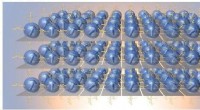
* Electrons in materials are bound to atoms. When light interacts with glass, the electric field of the light wave causes these electrons to oscillate.
* Resonance occurs when the frequency of the light matches the natural frequency of the electrons. This natural frequency depends on the strength of the binding forces between the electrons and the atoms.
* In glass, the binding forces are relatively strong. This means the natural frequency of the electrons is high, falling within the UV range.
Therefore, glass is transparent to visible light because the frequency of visible light is lower than the resonant frequency of the electrons in glass. UV light, however, is absorbed by the glass because its frequency matches the resonant frequency of the electrons. This is why UV light does not pass through glass.