Here's how it works:
* Electric potential is a measure of the potential energy that a charged particle has due to its position in an electric field.
* Electric potential difference is the difference in electric potential between two points. This difference creates an electric field, which exerts a force on charged particles.
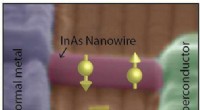
* Electrons are negatively charged particles. When a voltage is applied across a conductor, the electric field created by the potential difference exerts a force on the electrons, causing them to move from the point of higher potential to the point of lower potential. This flow of electrons constitutes electric current.
Think of it like a water analogy:
* Voltage is like the difference in water level between two points in a pipe.
* Electric field is like the force of gravity pulling the water down.
* Electrons are like the water molecules.
* Current is like the flow of water through the pipe.
The higher the voltage, the stronger the electric field, and the more force is exerted on the electrons, resulting in a larger current.