Here's a breakdown:
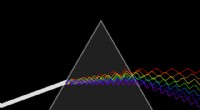
* Diffraction: The bending of waves as they pass around an obstacle or through an opening.
* Wavelength: The distance between two consecutive crests or troughs of a wave.
Key Factors:
* Size of Obstacle/Aperture: When the wavelength is significantly smaller than the obstacle or aperture, diffraction is minimal. As the wavelength approaches the size of the obstacle/aperture, diffraction becomes more pronounced.
* Wavelength: The longer the wavelength, the more significant the diffraction. For example, sound waves have longer wavelengths than light waves, which is why sound can diffract around corners more easily than light.
Example:
Imagine shining a laser beam through a narrow slit.
* Small slit: The beam will spread out less, and the diffraction pattern will be less noticeable.
* Large slit: The beam will spread out more, and the diffraction pattern will be more pronounced.
In summary, maximum diffraction occurs when the wavelength of the wave is similar in size to the obstacle or aperture it encounters.