1. Wavelength of Light:
* Light waves have very small wavelengths (in the order of hundreds of nanometers).
* This means the diffraction effects, like the bending around obstacles, are also very small.
* To observe these effects, the obstacles or openings need to be comparable in size to the wavelength of light.
2. Diffraction Angle:
* The angle of diffraction depends on the wavelength and the size of the opening/obstacle.
* For visible light, diffraction angles are usually very small. This makes the spreading of the light less noticeable unless you're looking for it specifically.
3. Everyday Objects:
* Everyday objects are often much larger than the wavelength of light.
* This means light tends to travel in straight lines around them, making diffraction less obvious.
How to See Diffraction:
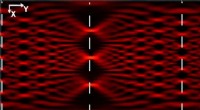
* Use a narrow slit or opening: This is the most common way to observe diffraction. Shine a laser pointer through a small opening, like the gap between two razor blades, and you'll see the characteristic diffraction pattern (a bright central band with alternating dark and bright bands).
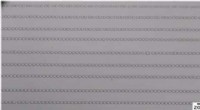
* Use a diffraction grating: A diffraction grating is a surface with many closely spaced lines. It diffracts light into many different directions, creating a colorful spectrum. This is the principle behind CD and DVD players, which use diffraction to read the data stored on the disc.
* Observe around sharp edges: Diffraction also happens around sharp edges, though it's less pronounced. Look at the shadow of a thin wire illuminated by a light source, and you'll see a faint blurring at the edge of the shadow.
In short, while diffraction is always happening, the effects are subtle and require careful observation with the right setup to be easily seen.