Here are examples for some major branches of physics:
1. Mechanics:
* Classical Mechanics: Analyzing the motion of a ball thrown in the air, designing a roller coaster track, calculating the trajectory of a rocket.
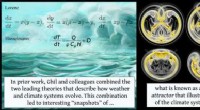
* Fluid Mechanics: Understanding how airplanes fly, designing efficient boat hulls, predicting the weather.
* Continuum Mechanics: Studying the behavior of materials under stress, designing bridges and buildings, understanding how earthquakes occur.
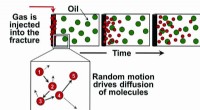
* Statistical Mechanics: Explaining the pressure of gas in a container, predicting the diffusion of molecules, studying the behavior of large systems like crowds.
2. Electromagnetism:
* Electricity: Designing electrical circuits, understanding how batteries work, using electricity to power our homes and devices.
* Magnetism: Using magnets to store data on hard drives, designing MRI machines for medical imaging, understanding how compasses work.
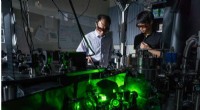
* Electromagnetism: Studying how light interacts with matter, developing wireless communication technologies, understanding the workings of lasers.
3. Thermodynamics:
* Heat Transfer: Designing efficient heating and cooling systems, understanding how heat flows through buildings, studying the transfer of heat in the atmosphere.
* Thermodynamics: Understanding how engines work, designing power plants, predicting the efficiency of chemical reactions.
* Statistical Thermodynamics: Explaining the behavior of gases, predicting the melting point of materials, understanding how entropy works.
4. Optics:
* Geometric Optics: Designing lenses for cameras and telescopes, explaining how mirrors work, understanding the phenomenon of refraction.
* Wave Optics: Explaining the interference and diffraction of light, understanding how lasers work, developing holographic technologies.
* Quantum Optics: Studying the interaction of light and matter at the atomic level, developing new optical technologies, understanding the nature of light.
5. Nuclear Physics:
* Nuclear Reactions: Studying how atoms decay, developing nuclear power, understanding the processes occurring in stars.
* Nuclear Structure: Studying the internal structure of atomic nuclei, developing new nuclear weapons, exploring the possibilities of nuclear fusion.
* Particle Physics: Exploring the fundamental particles that make up matter, discovering new particles, searching for the origin of the universe.
6. Condensed Matter Physics:
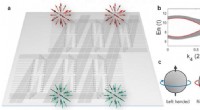
* Solid-State Physics: Understanding the properties of materials, developing new materials with specific properties, designing semiconductors for electronics.
* Materials Science: Developing new materials with specific properties, studying the behavior of materials under stress, designing new products like plastics and composites.
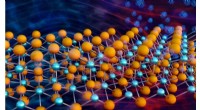
* Nanotechnology: Working with materials at the atomic scale, developing new materials with unique properties, designing nanodevices for various applications.
7. Relativity:
* Special Relativity: Understanding the behavior of objects moving at speeds close to the speed of light, explaining the phenomenon of time dilation, developing GPS systems.
* General Relativity: Explaining the force of gravity, understanding the expansion of the universe, studying the behavior of black holes.
8. Astrophysics:
* Cosmology: Understanding the origin and evolution of the universe, studying the properties of galaxies, predicting the fate of the universe.
* Stellar Physics: Studying the life cycle of stars, understanding how stars form and evolve, exploring the possibility of life on other planets.
* Planetary Science: Studying the formation and evolution of planets, exploring the possibility of life on other planets, analyzing the data from space missions.
These are just a few examples, and there are many other specialized branches of physics. It's important to remember that these branches often overlap and interact, leading to new discoveries and innovations.