A mechanical system is essentially a collection of components that work together to perform a specific function. It's like a complex puzzle where each piece plays a vital role in achieving the final outcome.
Here's a simplified breakdown:
1. Inputs: The system receives energy or signals from the outside world. This could be:
* Power: like a motor, engine, or human effort.
* Signals: like a button press, temperature change, or a sensor reading.
2. Components: These are the parts that make up the system, and each has its own specific function. Some common examples are:
* Mechanisms: Gears, levers, pulleys, linkages - these transmit and modify forces and motion.
* Frames: Provide structural support and hold the system together.
* Actuators: Convert energy into motion (e.g., motors, hydraulic cylinders).
* Sensors: Provide feedback about the system's state (e.g., pressure sensors, position sensors).
* Control Elements: Process information and make decisions to regulate the system's operation.
3. Interaction: The components interact with each other in a coordinated way to:
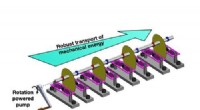
* Transform Energy: Convert one form of energy into another (e.g., electrical energy into mechanical motion).
* Transfer Motion: Move parts or objects in a specific way.
* Control and Regulate: Maintain the system's desired performance by adjusting inputs or component behavior.
4. Outputs: The system produces the desired result, which could be:
* Mechanical Motion: Moving parts, lifting loads, turning wheels.
* Energy Conversion: Generating electricity, heating, or cooling.
* Information Processing: Sending signals, displaying data, or making calculations.
Key Concepts to Understand:
* Force: A push or pull that can cause acceleration.
* Motion: Change in position over time.
* Energy: The ability to do work.
* Friction: A force that opposes motion.
* Efficiency: The ratio of useful output energy to total input energy.
Examples of Mechanical Systems:
* A Car: Engine converts fuel into motion, transmission modifies speed, brakes control motion, steering directs movement.
* A Bicycle: Pedals convert human power into motion, gears change speed, brakes stop the bike.
* A Watch: Springs store energy, gears control timekeeping, hands indicate time.
* A Robot: Motors provide power, sensors gather information, controllers make decisions, actuators perform actions.
Understanding the fundamental concepts of mechanical systems allows us to design, analyze, and improve complex machines and devices that are essential to our modern world.