Physical Science Involved:
* Newton's Laws of Motion: The car's acceleration, deceleration, and momentum are governed by Newton's laws.
* Friction: Tires grip the road due to friction, which allows for steering and braking.
* Energy: The car's engine converts chemical energy (from fuel) into mechanical energy to power the vehicle.
* Forces: Driving involves understanding forces like gravity, centripetal force (for turning), and air resistance.
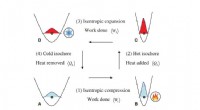
* Thermodynamics: The engine's operation involves principles of heat transfer and energy conversion.
Beyond Physical Science:
* Human factors: Driving requires perception, decision-making, and reaction time. These are psychological and cognitive processes.
* Engineering: The car itself is a complex engineering marvel involving mechanical, electrical, and materials science.
* Traffic laws and regulations: Driving is a social activity governed by rules and laws.
Conclusion:
While driving a car relies on physical science principles, it's a more complex activity that involves a blend of science, engineering, human factors, and social aspects. It's not solely confined to the realm of physical science.