Movement and Transportation:
* Walking, running, cycling: Newton's laws of motion govern how we move our bodies, applying force to overcome inertia and maintain balance.
* Driving: Understanding friction, momentum, and centripetal force allows us to navigate safely and efficiently.
* Flying: Aerodynamics, lift, and drag principles are essential for aircraft design and operation.
* Public Transportation: Understanding forces, energy, and momentum enables the design of efficient and safe trains, buses, and subways.
Everyday Objects and Activities:
* Using a phone: Electromagnetism powers communication networks and mobile devices.
* Cooking: Heat transfer (conduction, convection, radiation) is crucial for cooking food.
* Turning on a light switch: Electricity and circuits allow us to illuminate our homes.
* Taking a shower: Fluid mechanics and pressure govern water flow and distribution.
* Playing music: Sound waves and their properties are fundamental to music creation and enjoyment.
Technology and Innovation:
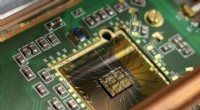
* Computers and electronics: Semiconductors, transistors, and integrated circuits are based on quantum physics principles.
* Medical imaging: X-rays, MRI, and ultrasound use physics to visualize the inside of our bodies.
* Renewable energy: Solar panels harness the energy of sunlight, while wind turbines convert wind energy into electricity.
* Robotics: Physics enables the development of robots for various applications.
Other Areas:
* Climate science: Understanding atmospheric processes, heat transfer, and radiation helps us predict and mitigate climate change.
* Sports: Physics principles are used in designing equipment, analyzing performance, and understanding movement.
* Architecture and construction: Structural engineering relies on physics to ensure building stability and safety.
In summary: Physics is not just an academic subject; it's the foundation upon which our modern world is built. From the simple act of walking to the complexity of modern technology, physics governs our daily interactions with the environment and the world around us.