The Law of Conservation of Momentum
The law states that in a closed system, the total momentum of the system remains constant, even if objects within the system collide. In simpler terms:
* Momentum: A measure of an object's mass in motion. It's calculated by multiplying mass (m) and velocity (v): momentum (p) = mv
* Closed System: A system where no external forces act on the objects. This means no forces are pushing or pulling on the objects from outside the system.
Collisions and Momentum Transfer
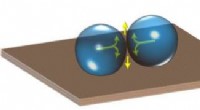
1. Before the Collision: Each object has its own momentum. Imagine two balls rolling toward each other.
2. During the Collision: When the balls collide, they exert forces on each other. These forces are equal in magnitude but opposite in direction, as dictated by Newton's Third Law.
3. After the Collision: Momentum is transferred between the balls. The balls might bounce off each other, stick together, or deform. The key is that the total momentum of the system *before* the collision equals the total momentum of the system *after* the collision.
Examples
* Billiard Balls: When a cue ball strikes another ball, momentum is transferred. The cue ball slows down, and the struck ball moves. The total momentum of the system (both balls) remains the same.
* Car Crash: In a head-on car crash, the momentum of each car before the collision is equal and opposite to the momentum of the cars after the collision, assuming the cars stick together.
* Explosions: While explosions seem to create energy, they actually redistribute the momentum of the original object. The pieces flying apart have momentum equal to the original object's momentum before the explosion.
Important Notes
* Elastic vs. Inelastic Collisions: Collisions can be elastic (energy is conserved, like billiard balls) or inelastic (some energy is lost as heat or sound, like a car crash). Even in inelastic collisions, momentum is always conserved.
* External Forces: The law of conservation of momentum applies only to closed systems. If external forces act on the system (like friction), the total momentum will change.
In Summary
Collisions demonstrate the law of conservation of momentum by showing how momentum is transferred between objects, ensuring that the total momentum of a closed system remains constant. It's a fundamental principle in physics that explains how objects interact and move in a wide range of situations.