1. Contact Forces:
* Normal Force: A force acting perpendicular to a surface, preventing an object from passing through it. Think of a book resting on a table.
* Friction Force: A force that opposes motion between two surfaces in contact. It can be static (preventing movement) or kinetic (acting during movement).
* Tension Force: A force transmitted through a string, rope, or cable when it is pulled tight. Imagine pulling on a rope to lift a weight.
* Applied Force: A force applied directly to an object by a person or another object. Pushing a box across the floor is an example.
* Air Resistance: A force that opposes the motion of an object through air. Think of a parachute slowing a person's descent.
2. Non-Contact Forces:
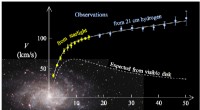
* Gravitational Force: A force of attraction between any two objects with mass. This is what keeps us on the Earth and what governs the motion of planets.
* Electromagnetic Force: A force that arises from the interaction of electric charges and magnetic fields. It's responsible for holding atoms together and for electricity and magnetism.
* Strong Nuclear Force: A force that holds the protons and neutrons together in the nucleus of an atom. It's incredibly strong but acts over very short distances.
* Weak Nuclear Force: A force involved in certain radioactive decays. It's weaker than the strong nuclear force but plays a vital role in nuclear processes.
How Forces Act:
* Cause Motion: Forces can start, stop, or change the direction of motion.
* Cause Deformation: Forces can stretch, compress, or bend objects.
* Change Momentum: Forces can change the momentum of an object (mass times velocity).
* Work and Energy: Forces can do work on an object, transferring energy to it.
* Interaction: Forces always occur in pairs, acting on two different objects. Newton's Third Law states that for every action, there is an equal and opposite reaction.
Important Concepts:
* Net Force: The overall force acting on an object, taking into account the direction and magnitude of all forces.
* Equilibrium: When the net force on an object is zero, it is in equilibrium and its state of motion does not change.
Understanding how forces act is fundamental to comprehending the world around us, from the simple act of walking to the intricate workings of the universe.