1. Acceleration: Gravity exerts a constant downward force on all objects near the Earth's surface. This force causes objects to accelerate downwards at a rate of approximately 9.8 m/s². This means that for every second an object falls, its downward velocity increases by 9.8 meters per second.
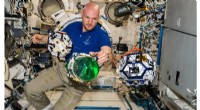
2. Free Fall: When an object is in free fall, it experiences only the force of gravity. This means it accelerates downwards at a constant rate, regardless of its mass.
3. Projectile Motion: Objects launched into the air experience both horizontal and vertical motion. Gravity affects the vertical motion, causing the object to follow a curved path (a parabola) as it falls back towards the Earth.
4. Orbital Motion: Gravity is the force responsible for keeping satellites and planets in orbit around the Earth or the Sun. The balance between the object's forward motion and the pull of gravity creates a circular or elliptical path.
5. Tides: Gravity from the Moon and the Sun pulls on the Earth's oceans, causing the tides to rise and fall.
Factors affecting gravity's influence:
* Mass: The more massive an object, the stronger its gravitational pull.
* Distance: Gravity weakens with increasing distance.
* Shape: The shape of an object can affect how gravity acts upon it, especially when dealing with large objects like planets.
Examples:
* A ball thrown in the air: Gravity slows the ball's upward motion, bringing it to a stop and then causing it to fall back down.
* A rock rolling down a hill: Gravity accelerates the rock as it rolls downwards, increasing its speed.
* The Moon orbiting Earth: Gravity keeps the Moon in orbit around Earth, preventing it from flying off into space.
In summary: Gravity is a fundamental force that influences the motion of objects in countless ways. It's responsible for everything from the way a ball falls to the way planets orbit stars.