1. Change in Speed:
* Speeding up: The object is moving faster over time.
* Slowing down: The object is moving slower over time.
2. Change in Direction:
* Turning: The object is changing its direction of motion, even if its speed remains constant.
3. Change in Both Speed and Direction:
* Curving: The object is both speeding up or slowing down and changing its direction of motion.
Here's how to think about it:
* Acceleration is about change: It's not just about how fast something is moving (speed), but about whether that speed is changing.
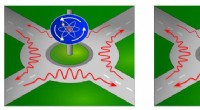
* Constant speed doesn't mean no acceleration: If an object is moving in a circle at a constant speed, it's still accelerating because its direction is constantly changing.
Examples:
* A car speeding up: The car's velocity is increasing, so it's accelerating.
* A car slowing down to a stop: The car's velocity is decreasing, so it's accelerating (in this case, decelerating).
* A ball thrown in the air: The ball accelerates upwards as it's thrown, then decelerates as it slows down and changes direction to fall back down.
* A satellite orbiting Earth: Even though it's moving at a constant speed, the satellite is constantly changing direction, so it's accelerating.
Note: Acceleration can be positive (speeding up) or negative (slowing down). It can also be in different directions, like up, down, left, or right.