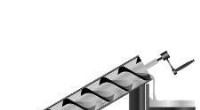
1. The volume of fluid displaced by the object: This is the key principle behind Archimedes' principle. The more fluid an object displaces, the greater the buoyant force.
2. The density of the fluid: Denser fluids exert a greater buoyant force. This is why it's easier to float in the Dead Sea (very salty, dense water) than in fresh water.
Here's a more detailed explanation:
* Archimedes' Principle: This principle states that the buoyant force on an object submerged in a fluid is equal to the weight of the fluid displaced by the object.
* Think of it this way: when an object is submerged, it pushes aside some of the surrounding fluid. That fluid, now displaced, wants to return to its original position, and this push back is the buoyant force.
* The more fluid the object pushes aside (i.e., the larger the volume it displaces), the stronger this push back will be.
* Density: The density of the fluid also plays a role. A denser fluid is essentially "heavier" for a given volume. This means a denser fluid will exert a stronger buoyant force on an object, because it weighs more and pushes back harder.
In summary, the buoyant force is directly proportional to the volume of fluid displaced and the density of the fluid. It's essentially the force that the fluid exerts upwards on the object to counteract the object's weight.