Periodic Motion
* Definition: A motion that repeats itself at regular intervals of time.
* Key Feature: The motion follows a predictable pattern and returns to its starting point after a specific time period (the period).
* Examples:
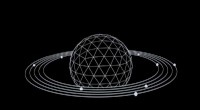
* The Earth revolving around the Sun
* A spinning top
* A pendulum swinging in a complete arc (if friction is negligible)
Oscillatory Motion
* Definition: A motion where the object moves back and forth about a fixed point (equilibrium position).
* Key Features:
* The object oscillates around a central position.
* It involves a restoring force that always directs the object towards the equilibrium position.
* Examples:
* A simple pendulum
* A mass attached to a spring
* A vibrating tuning fork
The Difference
The key difference lies in the nature of the motion:
* Periodic motion is broader. It encompasses any motion that repeats itself regularly, including those that don't involve a back-and-forth movement.
* Oscillatory motion is a specific type of periodic motion where the object moves back and forth around a fixed point.
Illustrative Examples
1. Circular motion: A satellite orbiting the Earth is a periodic motion (it returns to its starting point after a specific time). However, it's not oscillatory because it doesn't move back and forth.
2. Rotating wheel: A wheel spinning on its axis is periodic (it repeats its rotation). It's not oscillatory since it doesn't oscillate around an equilibrium position.
In Summary
All oscillatory motions are periodic, but not all periodic motions are oscillatory. Oscillatory motion is a more specific type of motion within the broader category of periodic motion.