Here's why it makes sense:
* Inertia: Objects with more mass are inherently harder to start moving and harder to stop once they are moving. This is due to their *inertia* – their resistance to changes in motion.
* Velocity: Velocity describes how fast an object is moving and in what direction.
* Combining the Concepts: Momentum combines these two ideas. A more massive object moving at the same velocity will have more momentum because it takes more effort to change its motion. Similarly, an object moving at a higher velocity will have more momentum, even if its mass is the same.
Think of it like this:
Imagine a bowling ball and a tennis ball, both traveling at the same speed. The bowling ball will have much more momentum because it has significantly more mass. Even if the tennis ball is moving at a much higher speed, it might not have the same momentum as the bowling ball if the bowling ball is heavy enough.
Key Properties of Momentum:
* Vector Quantity: Momentum has both magnitude (how much) and direction.
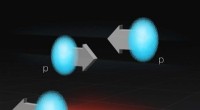
* Conservation: In a closed system, the total momentum remains constant. This means that momentum can be transferred between objects but is never lost.
Therefore, momentum (p) is defined as:
* p = m * v
where:
* p is momentum
* m is mass
* v is velocity
This relationship is crucial in understanding how objects interact and move in various physical systems.